
Lone Peak Overland, LLC
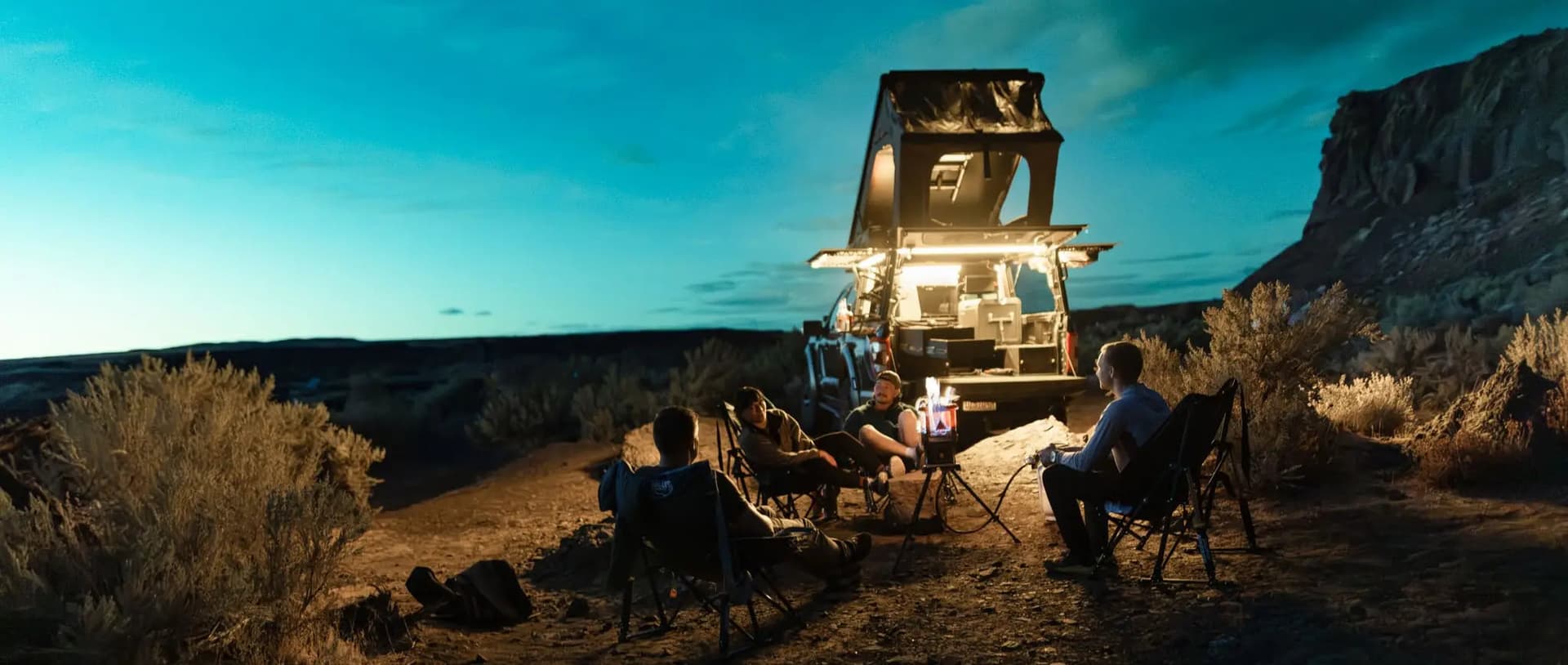
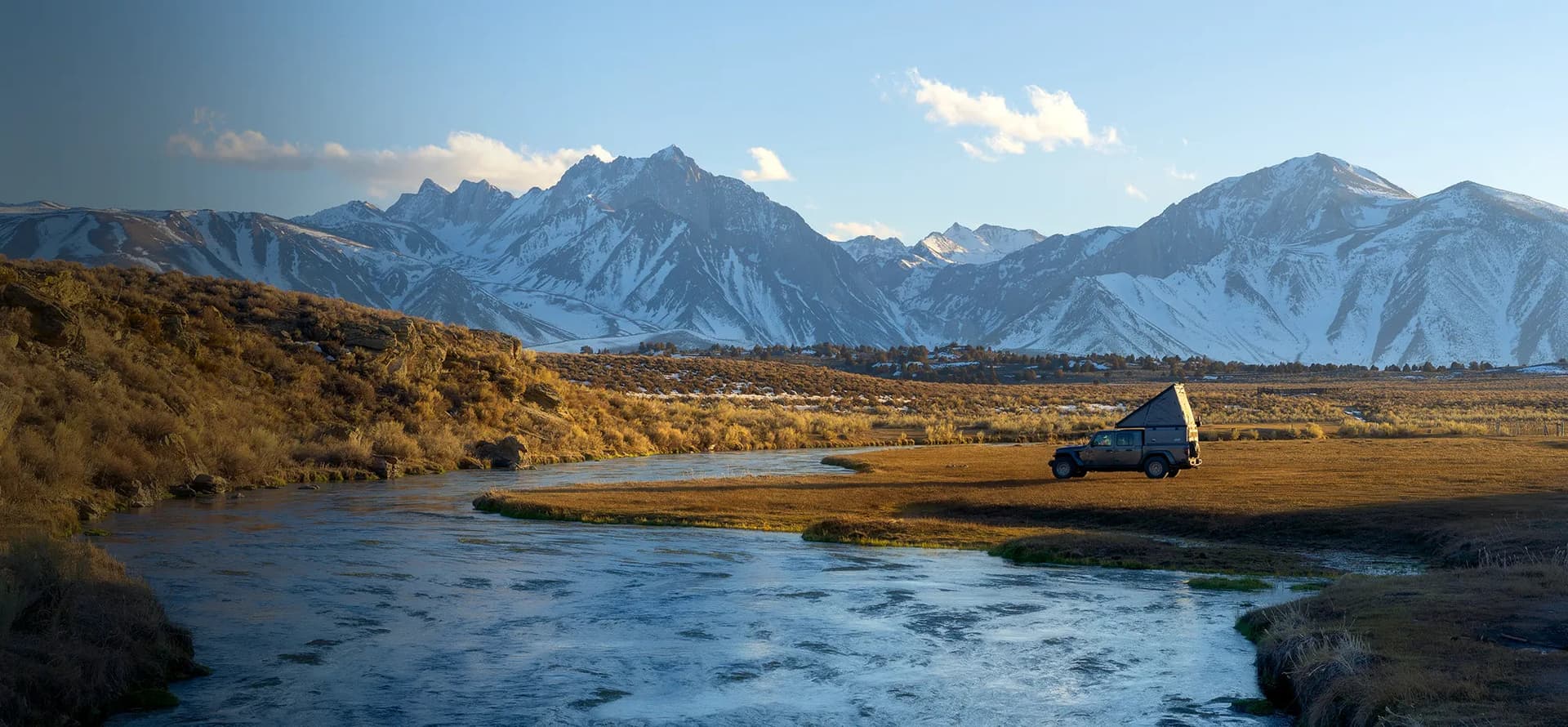
Photo: Lone Peak Overland, LLC
What is Lone Peak Overland, LLC?
Lone Peak Overland assembles lightweight aluminum wedge pop-up truck campers in Wenatchee, Washington. The V2 starts at $7,000 and 400 lbs, making it one of the most affordable hard-shell wedge options for mid-size and full-size trucks.
About Lone Peak Overland, LLC
Founded by Kyle Erickson and assembled in Wenatchee, Washington, Lone Peak Overland set out to build a wedge truck camper that undercuts the premium segment on price without giving up the core hard-shell formula. The Lone Peak Camper V2 uses a custom aluminum extrusion frame and 4mm PVDF-coated composite panels bolted together rather than welded or riveted, a construction approach that keeps manufacturing costs low while still producing a rigid, weather-capable shell. The result is a starting price of $7,000 and a base weight of 400 lbs, both meaningfully lower than most direct competitors.
The V2 ships in four tiered builds, from the bare-bones Baseline to the off-grid Overlander package, so buyers can match their budget to their actual use case. Setup takes roughly 15 seconds: the lift-away aluminum honeycomb platform raises on gas struts and the blackout tent deploys from inside, giving a 54-inch-wide sleeping area on full-size trucks. The camper fits 63 truck variants across Toyota, Ford, Chevrolet/GMC, Jeep, Nissan, and Ram platforms.
Key Features
- The most affordable hard-shell wedge on the market, starting at $7,000
- Light enough at 400 lb to work on mid-size trucks like the Tacoma and Frontier
- Four build tiers from bare-shell Baseline to fully off-grid Overlander
- 15-second gas-strut deployment with bedding that stays inside the shell
- In-stock units available for buyers who cannot wait on a custom order
Models & Specs
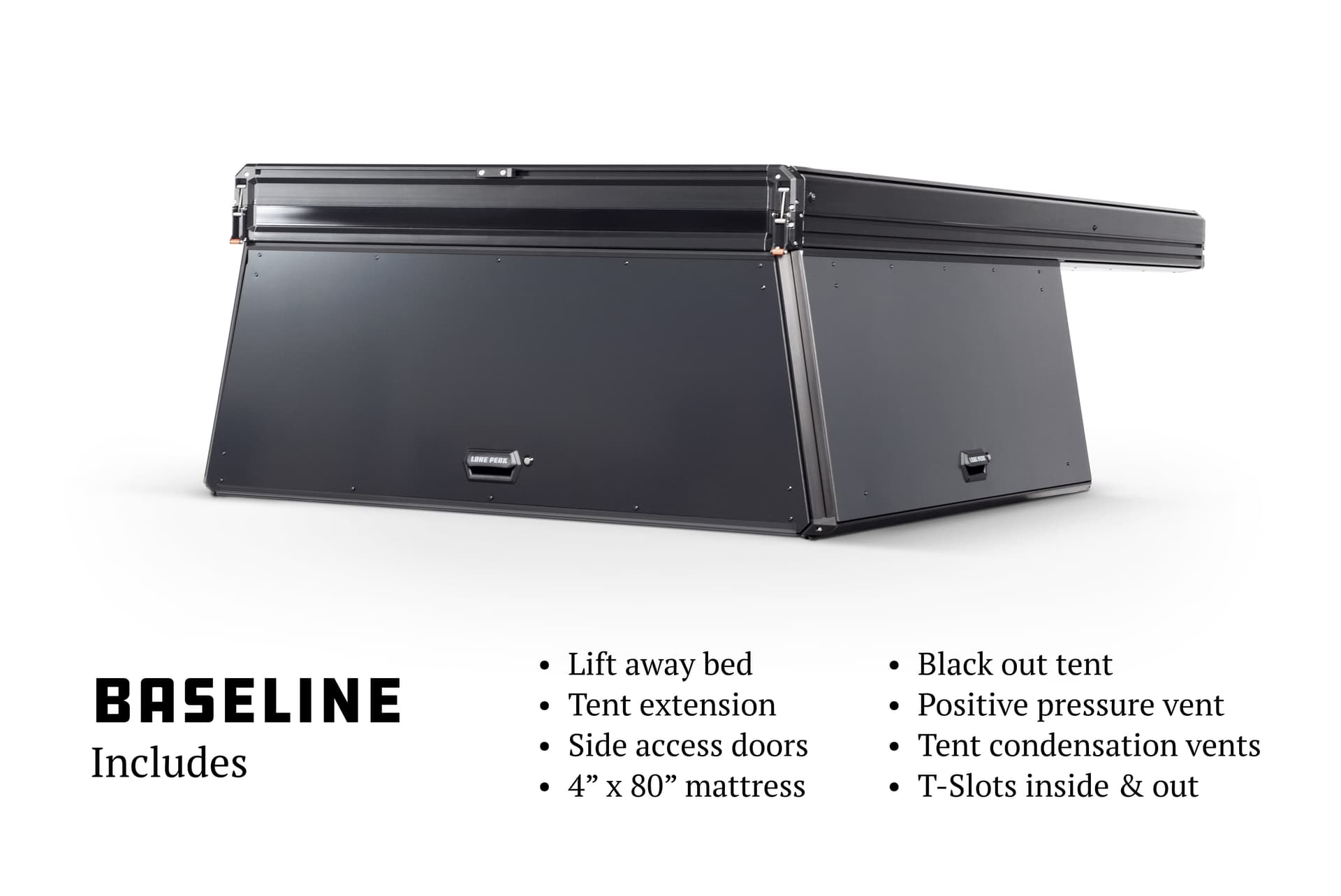
Photo: Lone Peak Overland, LLC
Lone Peak Camper V2
The most affordable hard-shell wedge on the market, fitting mid-size and full-size trucks in four build tiers from bare-shell Baseline to fully off-grid Overlander.
Specs
Pricing
- Build tiers
- Baseline $7,000 / Weekender $8,250 / Adventurer $10,050 / Overlander $13,250
Weight
- Base weight
- 400 lb
Dimensions
- Exterior length
- 120 in
- Height above bed (closed)
- 8 in
- Height above cab (standard)
- 2 in
- Sleeping width (full-size)
- 54 in
- Sleeping width (mid-size)
- 50 in
- Mattress length
- 80 in
- Mattress thickness
- 4 in
Capacity
- Bed weight limit
- 600 lb
- Roof load (2 load bars)
- 150 lb
Build
- Frame material
- Custom aluminum extrusion
- Panel material
- 4mm PVDF-coated composite panels
- Tent fabric
- 600D ripstop nylon, 5000mm PU coating
- Bed platform
- Aluminum honeycomb (lift-away, gas struts)
- Country of assembly
- USA (Wenatchee, WA)
Review Videos
Contact
Address
46 Lost Spoke Ln, Wenatchee, WA 98801, USA
Pacific Northwest
Phone
509-300-1277Pros & Cons
Pros
- Lowest entry price in the hard-shell wedge segment at $7,000, roughly $1,000 less than GFC's V2 Pro
- 400 lb base weight keeps payload impact minimal and works on mid-size platforms like the Tacoma and Frontier
- Four tiered builds let buyers choose exactly the accessories they need rather than paying for a turnkey package
- Fits 63 truck variants including Jeep Gladiator and both 5 ft and 6 ft Tacoma beds
- 15-second deployment with gas-strut lift-away platform and bedding that stays inside the shell
- In-stock units available for buyers who cannot wait 3-4 months for a custom order
Cons
- Bolted aluminum extrusion construction is less proven long-term than welded or riveted monocoque designs; early owners reported hinge failures on rear doors (resolved in current production)
- Baseline build ships with no power, lighting, windows, or heater port, so real-world cost climbs quickly once core accessories are added
- Three-season rating with the Weekender or higher build; serious winter use requires the optional diesel heater port and a separately sourced heater
- Tailgate interaction issue: closing the shell rear door before the tailgate can prevent the door from reopening without assistance
- No factory option for 8-foot truck beds
- Thin 4mm composite panels raise condensation and insulation concerns versus thicker-walled competitors in sustained cold
Similar Campers
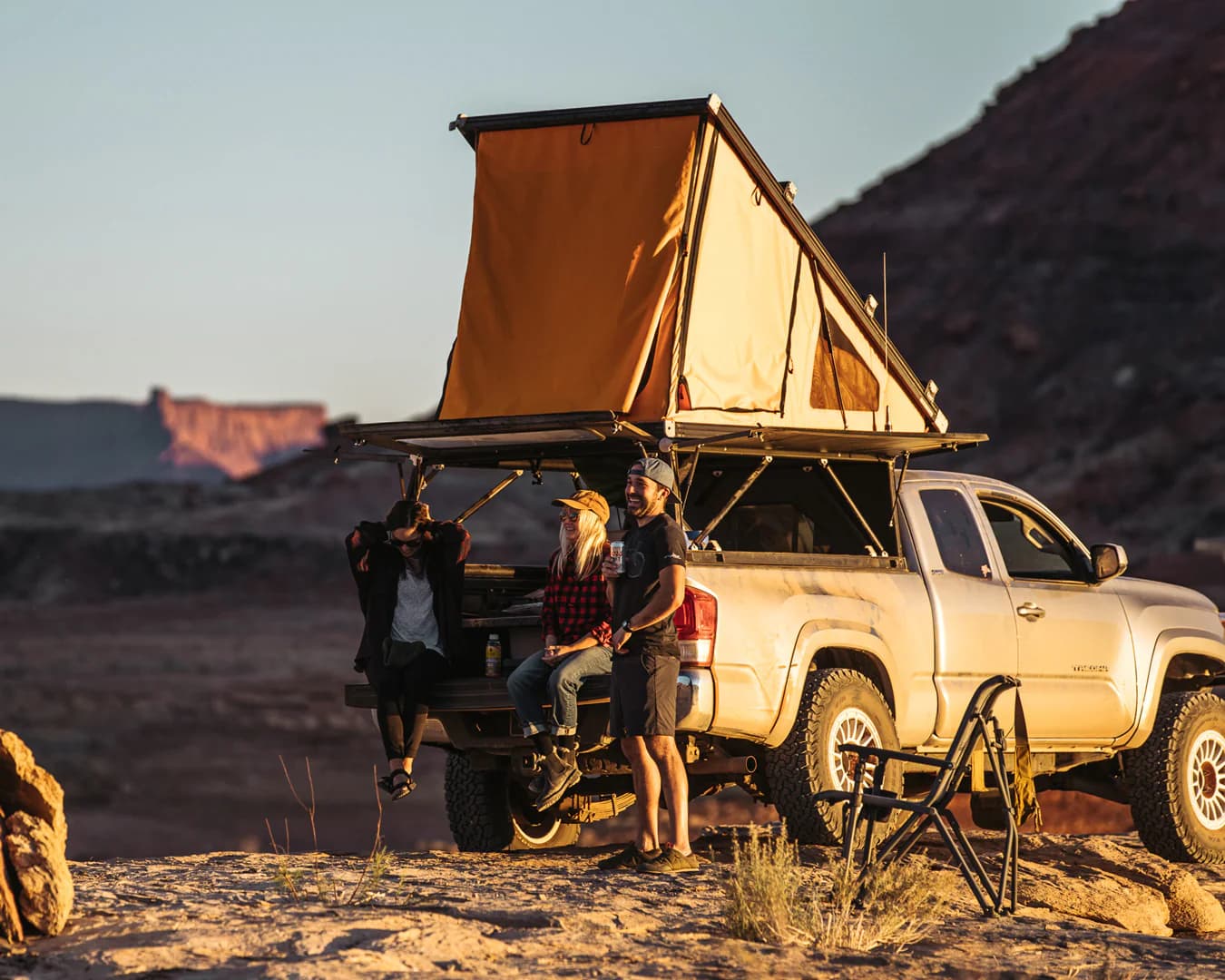 Featured
Go Fast Campers
107 S Broadway St, Manhattan, Montana
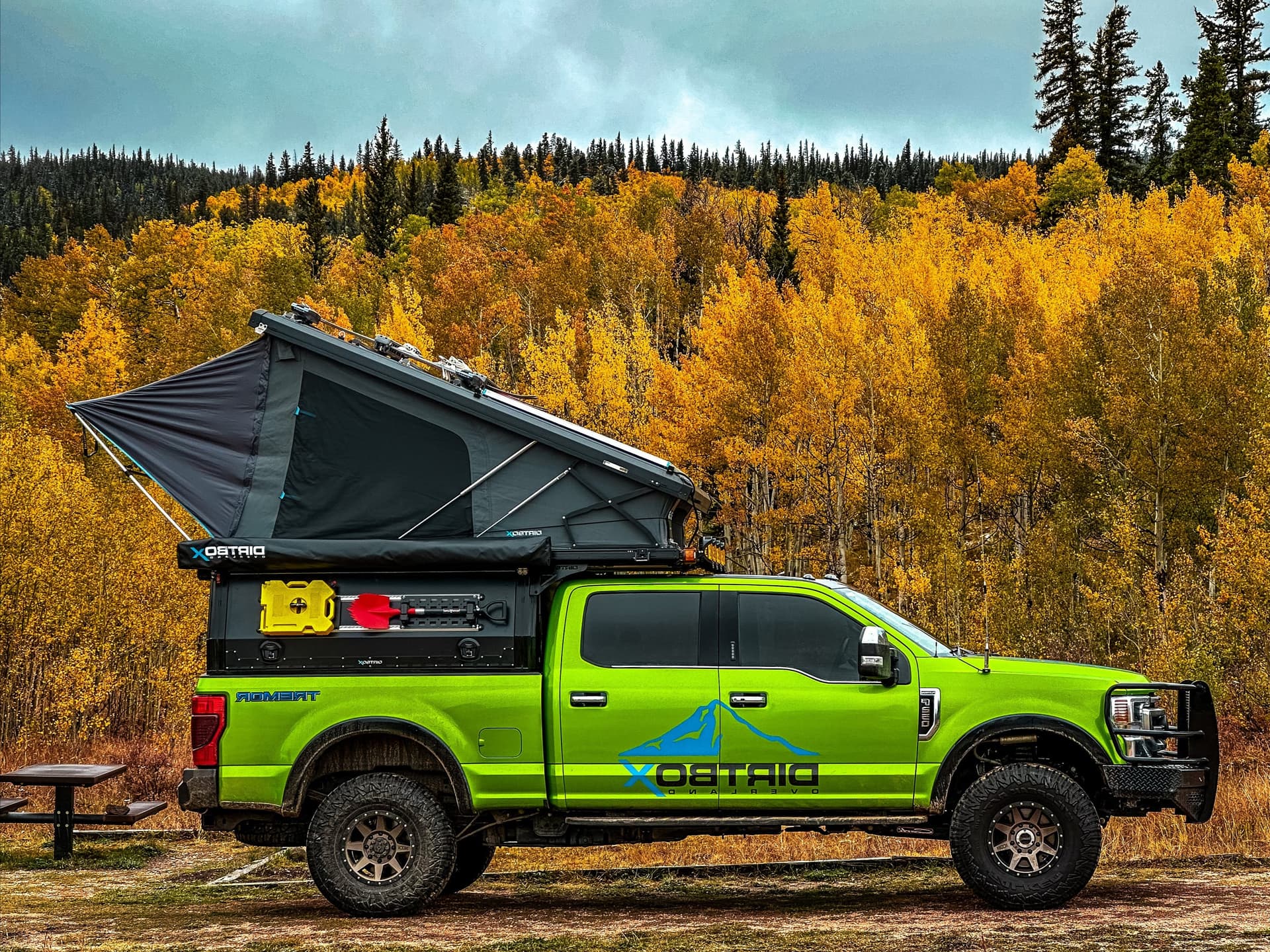
Dirtbox Overland
6066 E. 49th Dr, Commerce City, CO 80022
 Featured
Super Pacific
8520 NE Alderwood Rd. Unit A, Portland, OR 97220