
November 18, 2026
Supertramp Flagship LT Review: One of the Most Expensive Pop-Top Slide-Ins You Can Buy. Is It Worth It?
Is the $62,975 Supertramp Flagship LT worth it? Its frameless composite body, standard winter kit, owner reports, and a 4WC Hawk priced to match.
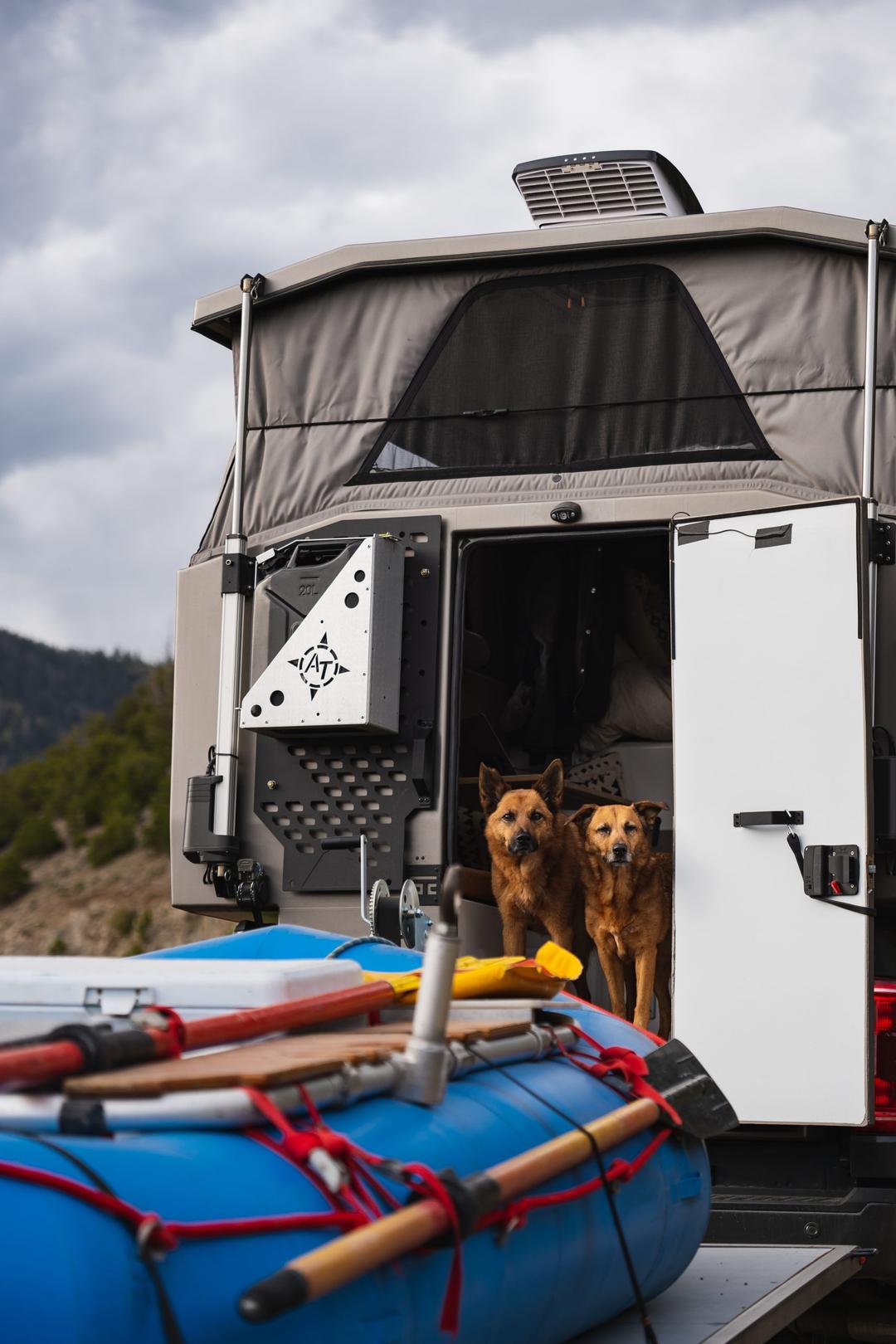
The Supertramp Flagship LT costs $62,975 before options, which puts it among the most expensive pop-top slide-ins sold in the US. Most of that money goes into one thing you can't see from the campsite: a one-piece composite body with no aluminum frame inside it. If you camp below freezing, it earns the price. If you camp May to October, a Scout Olympic Pop Up or a kitted 4 Wheel Campers Hawk gets you most of the way for about $25,000 less.
The Short Version
- Worth it for winter campers with a full-size truck: a frameless, foam-cored composite shell, Truma heat and hot water, a 24 gal tank and a heated floor cavity for the plumbing all come standard. See the Supertramp specs
- The gap is smaller than the sticker says. The closest build, Scout's composite-panel Olympic Pop Up, comes to about $37,730 with heat and a fridge, though without hot water or a fixed tank. An aluminum-frame 4 Wheel Campers Hawk kitted to match is about $39,350. Either way the LT costs about 1.6 to 1.7 times as much, not twice. Compare Scout Campers
- Skip it if you drive a mid-size truck (it fits full-size beds only), camp in summer, or can't wait: the current lead time is 11 months. Browse pop-up slide-ins
- From $62,975, plus a $1,000 install. Dry weight is 1,350 to 1,750 lb depending on the source and options; Truck Camper Magazine's loaded figure is 2,158 lb. Supertramp Campers
This is a researched review. We haven't had the pleasure of using a Supertramp in person; our sources are listed at the bottom.
A complete composite shell with no heat leakage
Almost every pop-top slide-in, including the 4 Wheel Campers Hawk and Fleet, starts as a welded aluminum frame with skin and insulation fixed to it. Scout wraps composite panels in an aluminum exoskeleton. Supertramp skips the frame. The LT body is one vacuum-infused piece of fiberglass and carbon fiber laid over a core of PET foam made from recycled bottles, 1.5 in thick in the walls and 0.75 in in the roof, with G-10 inlays wherever a tie-down or L-track bolts on. It's molded in-house in Golden, Colorado.
The main benefit of going 100% composite is that there's no metal for heat to leak through. Aluminum conducts cold straight through a wall, the effect builders call thermal bridging, and that cold spot is where condensation forms. Supertramp says its frameless build "eliminates condensation which is common with campers that have an aluminum frame," and Rugged Mountain called aluminum and steel framing "a huge thermal bridge" when it showed its own composite prototype to Truck Camper Magazine in January. Of the rivals in this review, the 4 Wheel Campers Hawk has a full aluminum frame, so it's the most exposed to bridging and condensation. Scout's composite panels cut most of that, but its aluminum exoskeleton still runs metal around the edges of the camper: better, not perfect.
Owners mostly back it up. A former Hawk owner on the Expedition Portal forum said they sold it "because of condensation issues," blaming the aluminum frame. Supertramp owners in the same thread report dry walls, though two of them found moisture under the mattress.
What it costs you: price, mostly, and repairability. Supertramp sells only from its factory in Golden, with no dealer network, so composite body damage is a job for the maker rather than any RV shop. Truck Camper Magazine lists the structural warranty at one year.
Underrated. The frameless body is the reason this camper exists, and it's the part a cheaper pop-top can't copy with options.
A rear booth, a real galley and 6'9" of headroom
Inside, the LT is laid out more like a small apartment than a pop-up. The queen bed sits over the cab with 36 in of headroom and gas-strut storage under it. An L-shaped couch wraps the front, the bamboo-topped galley has a two-burner stove, a 14 in sink and a 65 liter Isotherm fridge, and a booth at the back hides a Thetford cassette toilet. Add $1,000 and that booth becomes an inside shower with a curtain. Open, you get 6'9" of standing room; closed, Truck Camper Magazine measured 55.75 in, and Scott Brady of Expedition Portal showed it is still usable for sitting and lying down with the top lowered.
Brady's summary: "it just feels massive on the inside." He also called it "intentionally austere," which is fair. The finishes are vinyl plank and washable cushions, with no upper cabinets. The space is the luxury here, along with having a toilet you can use without unpacking anything.
What it costs you: weight and truck choice. Truck Camper Magazine puts it at 2,158 lb loaded with water, propane and 500 lb of gear, and it fits most full-size trucks with 6.5 to 8 ft beds and nothing smaller. A 4WC Fleet or Scout Yoho will go on a Tacoma; the LT won't.
Underrated. A toilet in its own booth, standard, changes how a pop-top works on a rainy week.
Four-season kit that comes standard
This is where the price makes the most sense. Every LT ships with a Truma Combi, which runs both the furnace and a 2.5 gal water heater on propane, with ducts to the living area, the bed and a 6 in floor cavity that holds the 24 gal fresh tank and the batteries. Supertramp says that heated cavity keeps "a thermal barrier between you and the cold air underneath," and draining for winter is one valve, with no air compressor or pink antifreeze. A diesel Truma (with an induction cooktop) is a $3,500 upgrade if you'd rather run one fuel.
The weak point is the same one every pop-top has: the soft wall. Supertramp uses a three-layer insulated fabric, and the windows zip through mesh, clear vinyl and an insulated shade. Nobody publishes an R-value for the fabric, and Supertramp's estimate of R-7 for the composite shell comes from GearJunkie's 2022 interview with the founders, not from its own spec sheet. Brady's main worry was durability rather than warmth: he wasn't sure the window zippers would last.
Owners have taken it into real cold. In a Truck Camper Magazine owner profile, an LT owner on an F-250 said the Truma "easily kept the inside of the camper at 71°F" on a night around 10°F near Fruita, Colorado. Another owner on Expedition Portal reported being "very happy with the comfort and performance" in mid-winter, and that the only real condensation was on the vinyl windows and fans. One long-time owner did concede that "the Flagships soft top isn't as insulated as some brands."
Overrated? No. It's the most complete winter package in a pop-top at this weight, as long as you accept that the top is still fabric.
What you'd expect
The rest is the class standard, done well: an electric lift on four actuators (about 10 seconds, with a manual override), Reico Titan jacks, 330W of roof solar with Victron charging, two Maxxair fans, a keypad door, L-track inside and out, propane and CO alarms. One thing to check on your quote: the model page lists a 100Ah heated lithium battery as standard, while the online configurator sells power packages starting at 200Ah and a 1,500W inverter for $2,650. Ask which one the base price includes.
| Supertramp Flagship LT | |
|---|---|
| Starting price | $62,975 (plus $1,000 install) |
| Dry weight | 1,400 to 1,750 lb (Supertramp's page); 1,350 lb (Truck Camper Magazine) |
| Loaded weight | 2,158 lb with water, propane and 500 lb of gear (Truck Camper Magazine) |
| Truck fit | Most full-size trucks, 6.5 to 8 ft beds |
| Interior height | 6'9" open, 55.75 in closed |
| Heat and hot water | Truma Combi, propane (diesel +$3,500) |
| Fresh water | 24 gal |
| Toilet / shower | Cassette toilet standard; inside shower +$1,000 |
| Solar | 330W |
| Lead time | 11 months |
How it stacks up: the half-price pop-ups, kitted to match
To compare fairly, price each camper up to the same kit. Scout's furnace and fridge are options, and 4 Wheel Campers' $20,800 is a Base shell with no fridge, sink or shower. So we added the makers' own published option prices until each one matched the LT's standard kit as closely as it can. These are our sums, not quotes, and they leave out freight and tax.
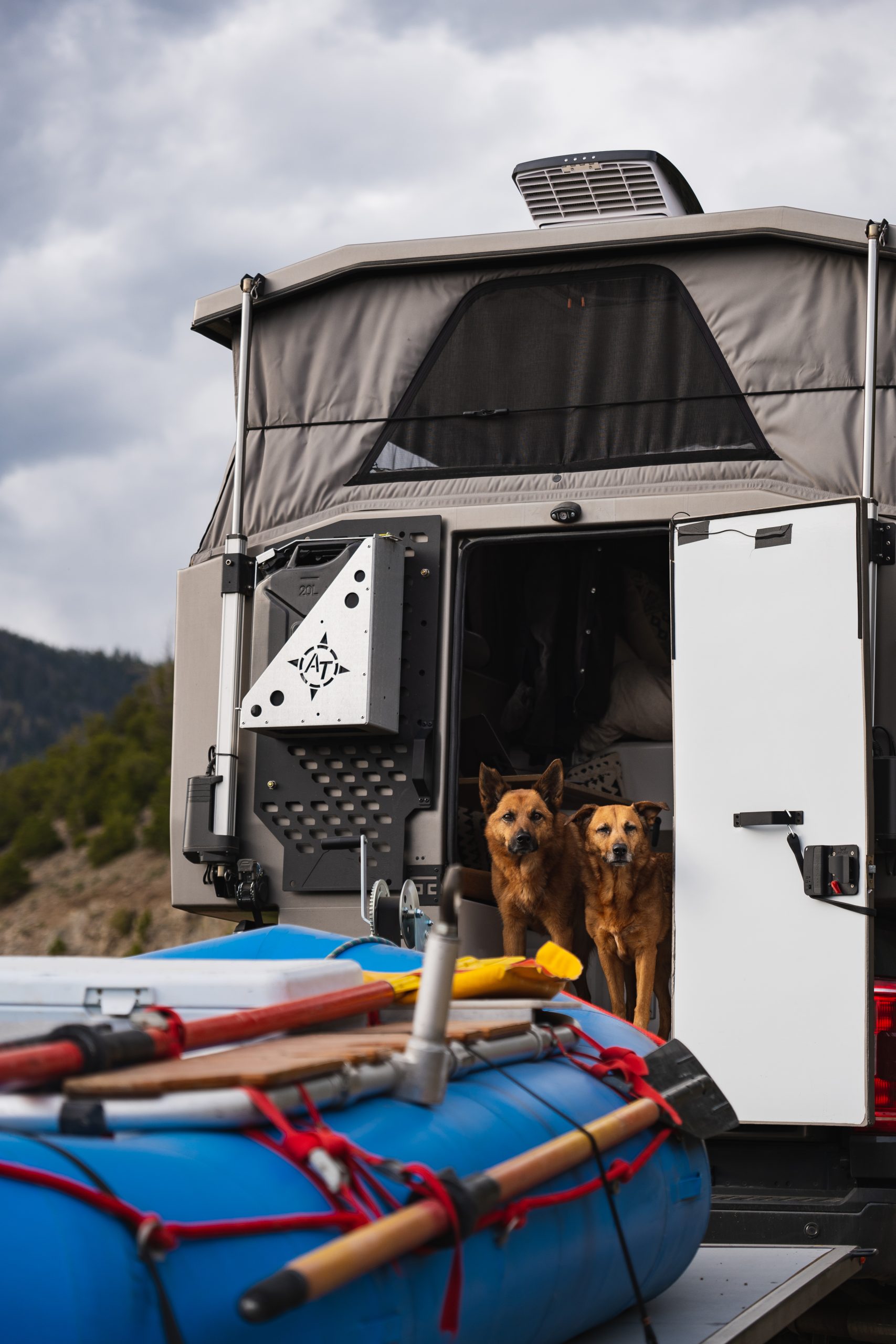 The LT, as it shipsSupertramp Flagship LT$63,975 installed1,400 to 1,750 lb. Frameless composite shell, Truma heat and hot water, 24 gal tank. Full-size trucks, 6.5 to 8 ft beds.See the LT at Supertramp →
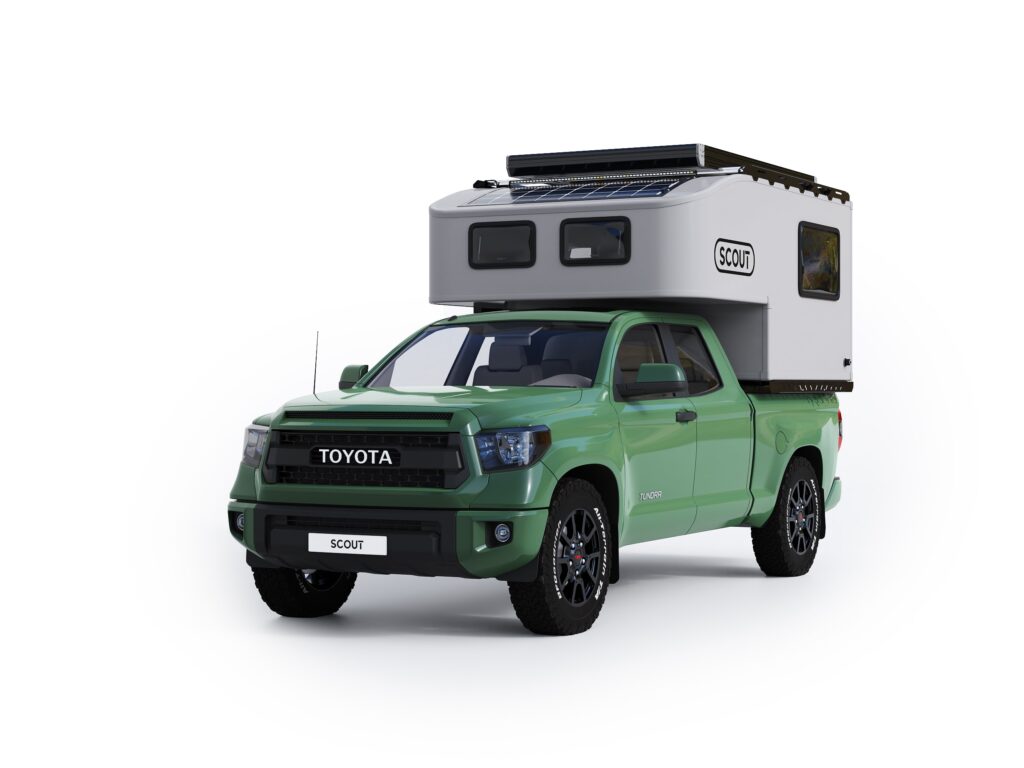 Closest build: composite wallsScout Olympic Pop UpAbout $37,730 kitted (from $33,490)1,154 lb. Composite panels in an aluminum exoskeleton, diesel heat added. No hot water, 4.9 gal jerry can. Half-tons, 5.5 ft beds and up.See the Olympic Pop Up at Scout →
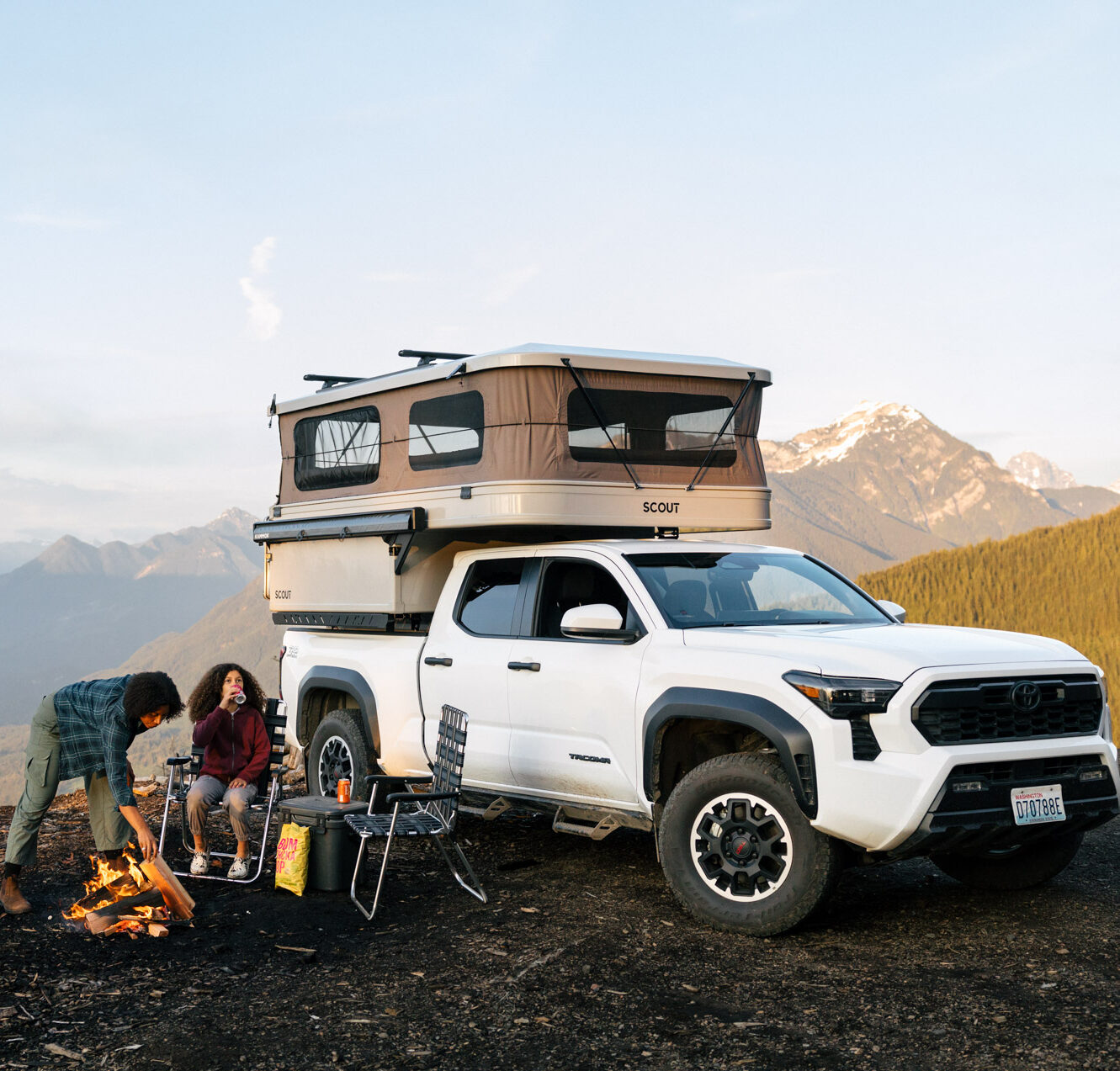 Same build for a mid-size truckScout Yoho Pop UpAbout $35,730 kitted (from $31,490)941 lb. The Olympic's construction sized for a Tacoma or Ranger with a 5 ft bed or longer. No hot water.See the Yoho Pop Up at Scout →
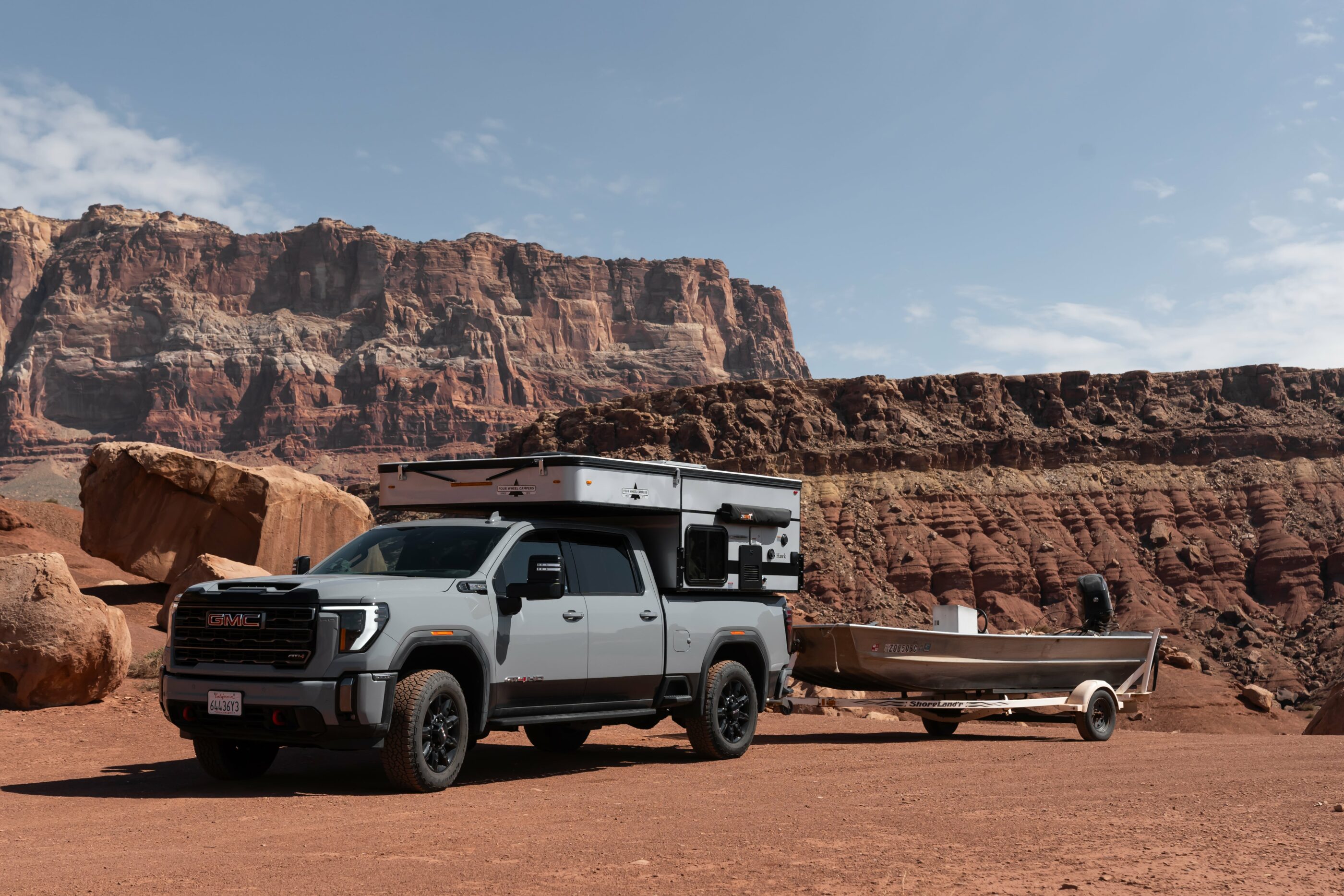 The aluminum-frame alternative4 Wheel Campers HawkAbout $39,350 kitted (from $30,675)1,200 lb. Welded aluminum frame, Truma heat and hot water added, 20 gal tank. Full-size trucks, 6 to 6.5 ft beds.See the Hawk at 4 Wheel Campers →
- Kitted price: LT $63,975 · Olympic Pop Up $37,730 · Yoho Pop Up $35,730 · Hawk $39,350
- Weight: LT 1,400 to 1,750 lb · Olympic 1,154 lb · Yoho 941 lb · Hawk 1,200 lb
- Body: LT molded composite, no frame · Scout composite panels in an aluminum exoskeleton · Hawk welded aluminum frame
- Heat and hot water: LT Truma heat and hot water · Scout diesel heat, no hot water · Hawk Truma heat and hot water (both options)
- Fresh water: LT 24 gal tank · Scout 4.9 gal jerry can · Hawk 20 gal tank
- Trucks: LT full-size, 6.5 to 8 ft beds · Olympic half-ton, 5.5 ft and up · Yoho mid-size, 5 ft and up · Hawk full-size, 6 to 6.5 ft
- Wait: LT 11 months · Scout 3 to 4 months · Hawk 2 to 3 months
The Scout Olympic Pop Up is the closest build to the LT. Scout also skips wood and builds with composite structural panels, with foam-insulated walls it sells as four-season, though they sit inside an aluminum exoskeleton rather than forming one molded shell. Add Scout's $2,995 diesel heater and a $1,245 fridge and it comes to about $37,730, roughly $26,000 less than an installed LT, at 1,154 lb. What you don't get is hot water, a fixed water tank (Scout ships a 4.9 gal jerry can) or an insulated soft wall, which Scout still lists as "coming soon." On a Tacoma or Ranger, the Yoho Pop Up is the same idea at 941 lb. Our Scout Campers review covers every model.
If you'd rather have an aluminum frame, the 4 Wheel Campers Hawk is the alternative. Kitted with a Truma furnace ($2,400), a Truma water heater ($1,975), the quilted thermal pack for the soft wall ($1,450), 250W of solar ($1,950) and the required install ($900), it comes to about $39,350, with a 20 gal tank. 4WC offers a built-in cassette toilet ($1,725) and an inside shower, but only in its front dinette floor plan. On a mid-size truck, the Fleet is the same camper sized down. See our 4 Wheel Campers review.
Charley runs Overland Addiction and camps in a 2006 4 Wheel Campers Eagle. His read on the Hawk: it isn't as insulated or as robust as a composite camper, but it's very repairable and still an extremely dependable design, and you can usually pick one up used, a couple of years old, for an even bigger discount.
If you want to spend more, the directory has two pop-up slide-ins above the LT: the Outfitter Apex 8 ($64,995) and the OEV Hudson Bay 6.75' Pop-Up ($83,867).
What the Scout and 4WC do better
- They weigh less. The Olympic Pop Up is 1,154 lb and the Hawk 1,200 lb. Supertramp's page lists the LT at 1,400 to 1,750 lb (Truck Camper Magazine prints 1,350 lb dry), so ask for the weight of your build and check it against the payload on your door-jamb sticker.
- They fit more trucks. The Yoho Pop Up and the 4WC Fleet go on a Tacoma or Ranger. The LT needs a full-size truck with a 6.5 or 8 ft bed.
- You get one sooner. 4 Wheel Campers quotes 2 to 3 months and Scout 3 to 4. The LT's lead time is 11 months, so one ordered today arrives next fall.
- More layouts. Supertramp builds one pop-up floor plan. 4WC sells several, including a front dinette layout, plus a $650 king bed slide-out on the Hawk; Scout sells three sizes as pop-ups or hard-walls.
- A real used market. As Charley says above, a used 4WC is easy to find. A used Supertramp isn't; a former 4WC owner on Expedition Portal called them "quite a bit more expensive since you can't find them used."
Our take
From the spec sheets, the configurator, Brady's review and the owner thread, the LT reads like a camper built by people who camp in Colorado winters. Keith and Kelsey Panich started the company in 2017 after shopping for a truck camper and not liking the options; their first two prototypes were aluminum before they went composite. The money is in the right places: the body, the heat and water system, and a layout with a real toilet. Truck Camper Magazine's hands-on first look in 2024 put it plainly: "This is one well-built camper."
Owners on the Expedition Portal forum mostly report small things (a firm mattress, soft walls that take a few trips to fold in cleanly, a stock charger some upgrade) rather than big failures, and they are notably warm about the company itself. One summed it up: "Yes it's a lot of money, but it's honestly worth it." The record is still short. The first camper rolled out in 2021 and an owner picked up Flagship #189 in November 2025, so nobody can tell you yet how a composite pop-top holds up after fifteen winters.
Should you buy it?
The LT is the no-compromises camper for the hardcore user: a hunter, skier or enthusiast who plans for long-term, four-season use and is willing to pay for a camper built in the US. Judging by the lead times, that's a bigger group than we would have thought. At this size and weight you need a heavy-duty truck to match, but this is the closest you'll get to an RV on wheels while still staying focused on overlanding and exploring over RV highway use.
If you camp mostly from spring to fall, the math doesn't hold. Against $63,975 installed, a Scout Olympic Pop Up with heat and a fridge is about $37,730 and a matched Hawk about $39,350, so you're paying roughly $25,000 for a frameless shell, standard hot water and a toilet booth. Take the Scout for the closest composite build at the lowest weight, or the Hawk for hot water, a real tank and a frame that's easy to repair (or a used one for less), and be camping by spring instead of next fall.
And if you drive a Tacoma, Ranger or Colorado, skip it: the LT doesn't fit. Start with the mid-size truck camper guide.
Watch it
Still deciding? See the full specs for Supertramp Campers, compare every pop-up slide-in, or browse the camper directory.
Sources: Supertramp Flagship LT page, configurator, About page and 2024 Flagship LT walkaround video (checked November 18, 2026); Truck Camper Magazine, Supertramp buyer's guide (December 2025), "Supertramp Flagship LT: First Look" (September 2024), "From Firehouse to Forest Roads" owner profile (May 2026) and "Announcing the 2024 Supertramp Flagship LT" (November 2023); OVR Mag, Supertramp company profile (September 2025); GearJunkie, "Supertramp Campers: Built Light to Last" (May 2022); Expedition Portal, Flagship LT video review by Scott Brady (November 2022, an earlier version of the camper); Expedition Portal forum, Flagship LT owner thread (2023 to November 2026); 4 Wheel Campers Hawk and Fleet spec sheets and option prices (September 2026); Scout Campers Yoho and Olympic Pop Up pages and order pages (checked November 18, 2026); Truck Camper Magazine, "Rugged Mountain Reveals Granite Platinum Composite Prototype" (January 2026). Matched prices are our sums of each maker's published option prices, not quotes. Owner observations are individual reports, not brand-wide patterns. Charley's take is from his own 4 Wheel Campers Eagle, not a Hawk. Images: Supertramp Campers, Scout Campers, 4 Wheel Campers.
Ready to find your camper?
Compare All Brands