
November 12, 2026
4 Wheel Campers Review: Every Model, Which Truck It Fits, and What BASE vs Full Camper Really Costs
All 4 Wheel Campers models in one place: Project M, the Swift, Fleet, Raven, Hawk and Grandby slide-ins, the new CampOut series and the flatbeds, with current prices, weights, truck fit and what the $10,000 gap between a BASE shell and a full camper buys.
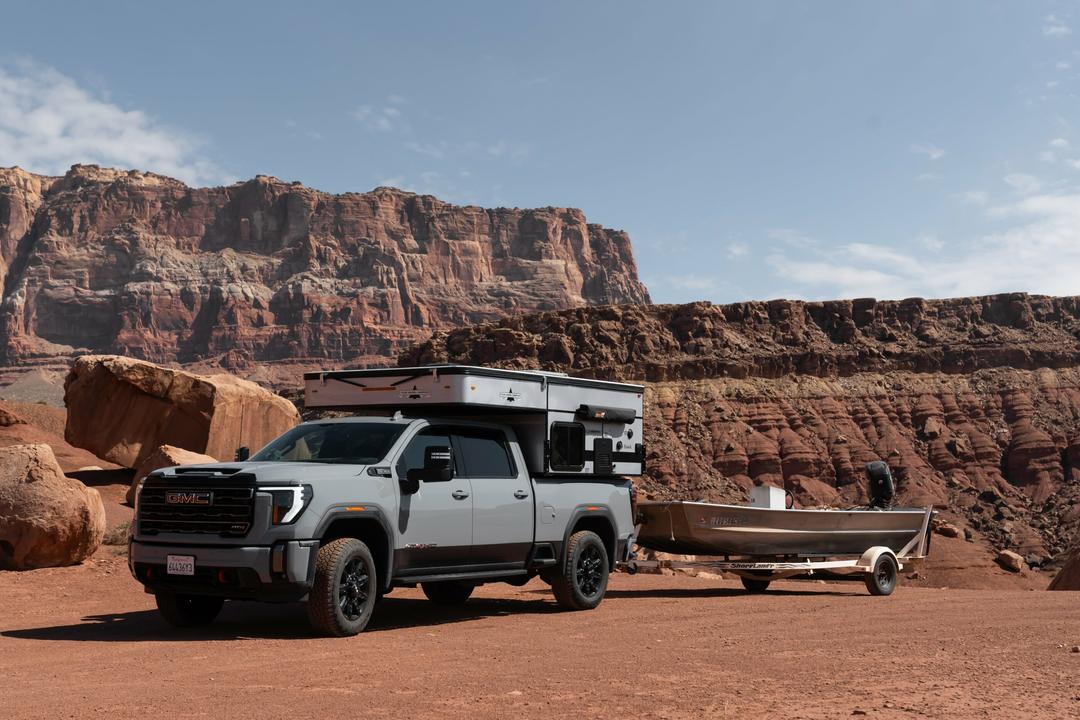
The Short Version
- Tacoma, Colorado or Canyon with a 6 ft bed? The Fleet is the 4 Wheel Camper most mid-size owners should start with: $30,675 as a full camper, about 1,050 lb as a BASE shell, and 54 in tall closed. See the Fleet specs →
- Half-ton with a 6 to 6.5 ft bed? The Hawk is the classic: same $30,675 price, a queen bed, 6 ft 6 in of headroom popped up and about 1,200 lb as a shell. See the Hawk specs →
- Want the cheapest, lightest way in? Project M bolts to the bed rails from $12,900 at 352 to 465 lb. It is a pop-up shell you outfit yourself, not a camper with a kitchen. See Project M →
- "BASE" is not the real price. A BASE slide-in ($20,275 to $21,850) is an open shell with no fridge, sink or shower option. The full camper adds about $10,000, and the newer CampOut series ($24,450 to $26,000) sits in between. Jump to what each one gets you →
4 Wheel Campers is the name most people start with when they look at pop-up truck campers, and the prices floating around online are a mess. Forum threads quote $19,995 slide-ins, dealer listings mix model years, and the site itself now sells four different things: a topper, BASE shells, the modular CampOut series and full campers, plus flatbed versions that start above $43,000.
This review puts the current lineup in one place: every model, which truck it fits, what it weighs, what it costs and what the price actually includes. It is built from 4WC's model pages (checked November 12, 2026), its September 2026 spec sheets, our directory data and published owner reports. We have not tested the current models. Charley, who runs Overland Addiction, has lived with a 2006 4WC Eagle on his Tacoma for years, and that rig has its own series.
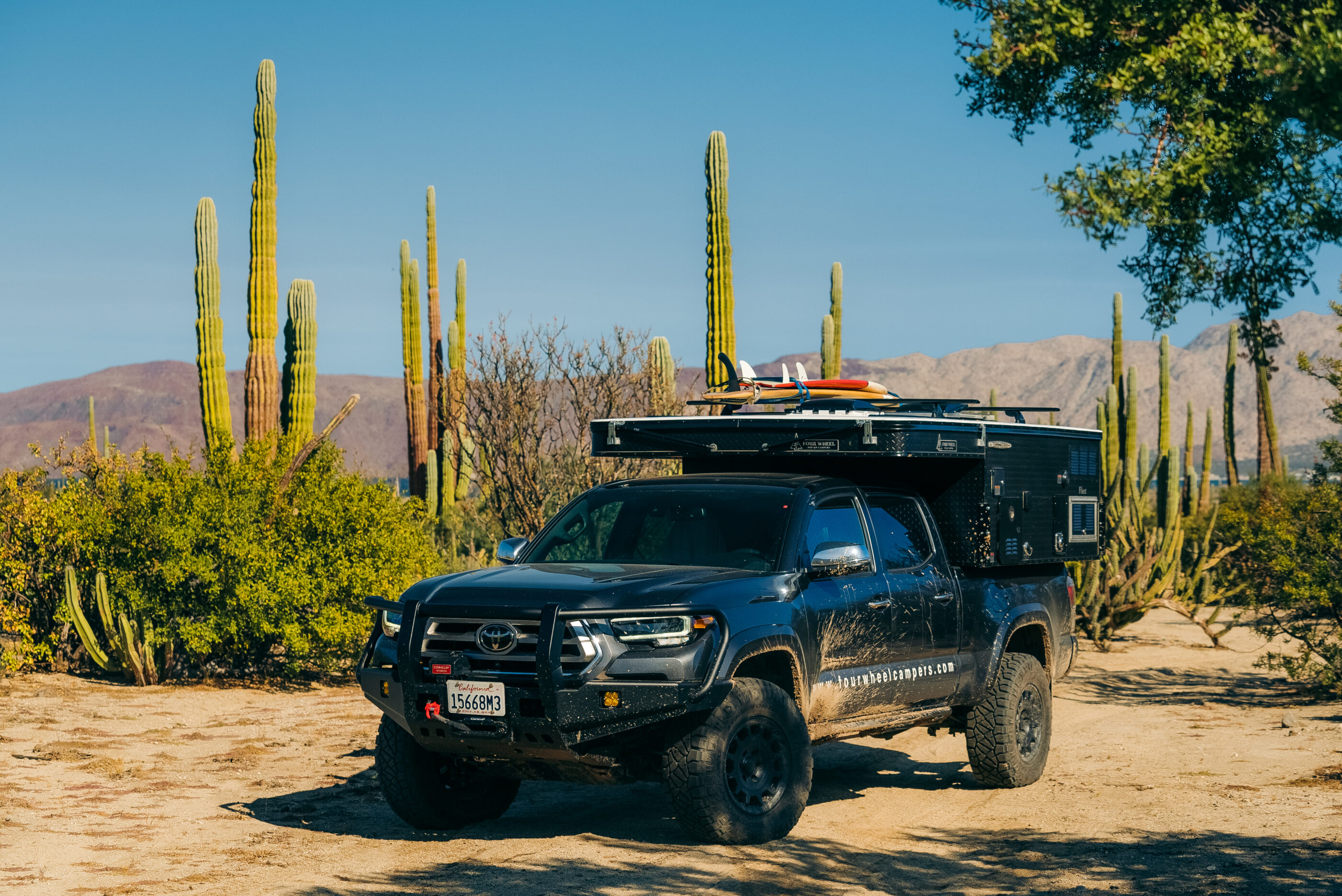 Best for mid-size trucks4 Wheel Campers FleetFrom $30,675 (BASE $20,800)For a Tacoma, Colorado or Canyon with a 6 ft bed. 54 in closed, about 1,050 lb as a shell.View 4 Wheel Campers →
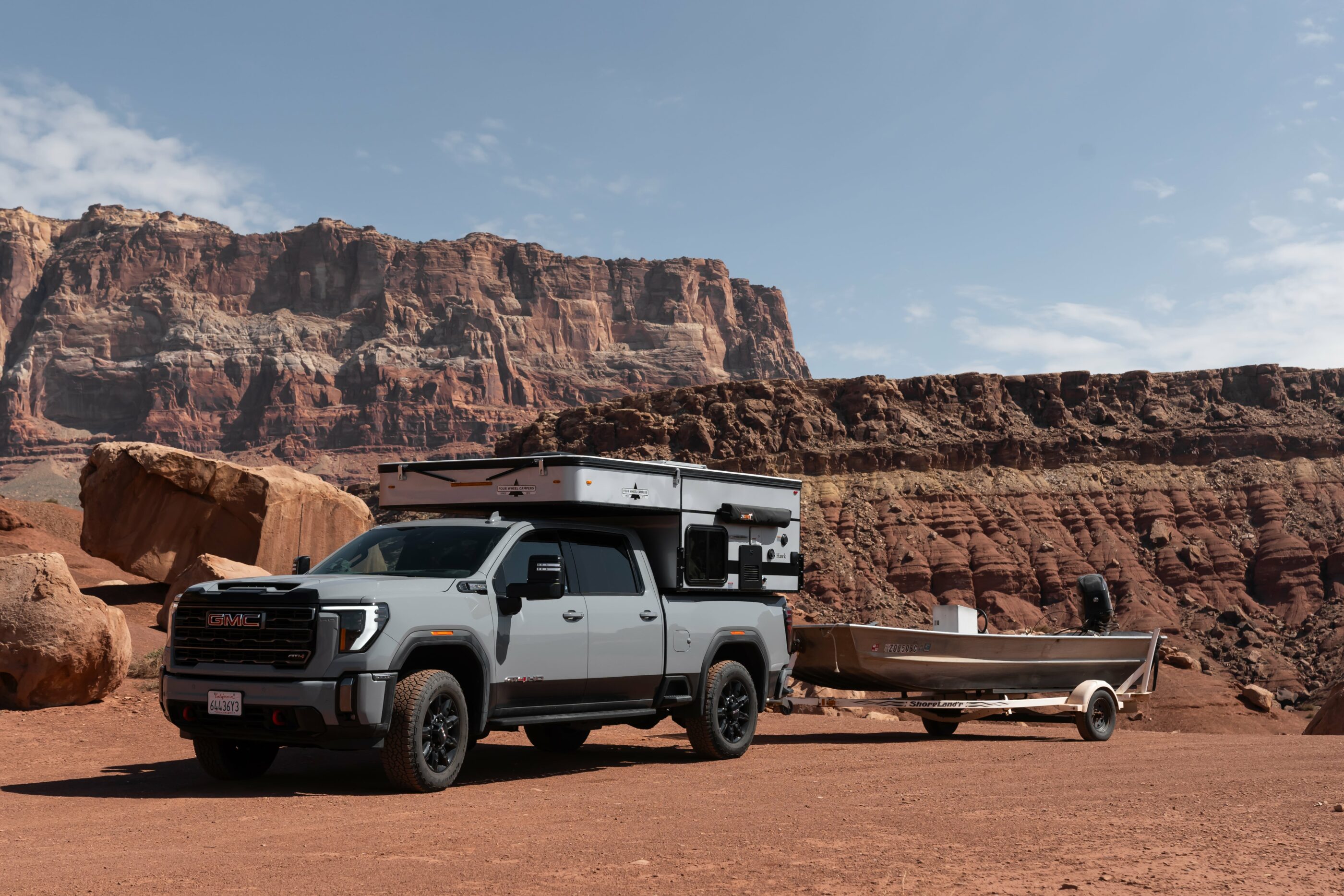 Best for half-ton trucks4 Wheel Campers HawkFrom $30,675 (BASE $20,800)For an F-150, Tundra, Silverado or Ram with a 6 to 6.5 ft bed. Queen bed, 6 ft 6 in inside.View 4 Wheel Campers →
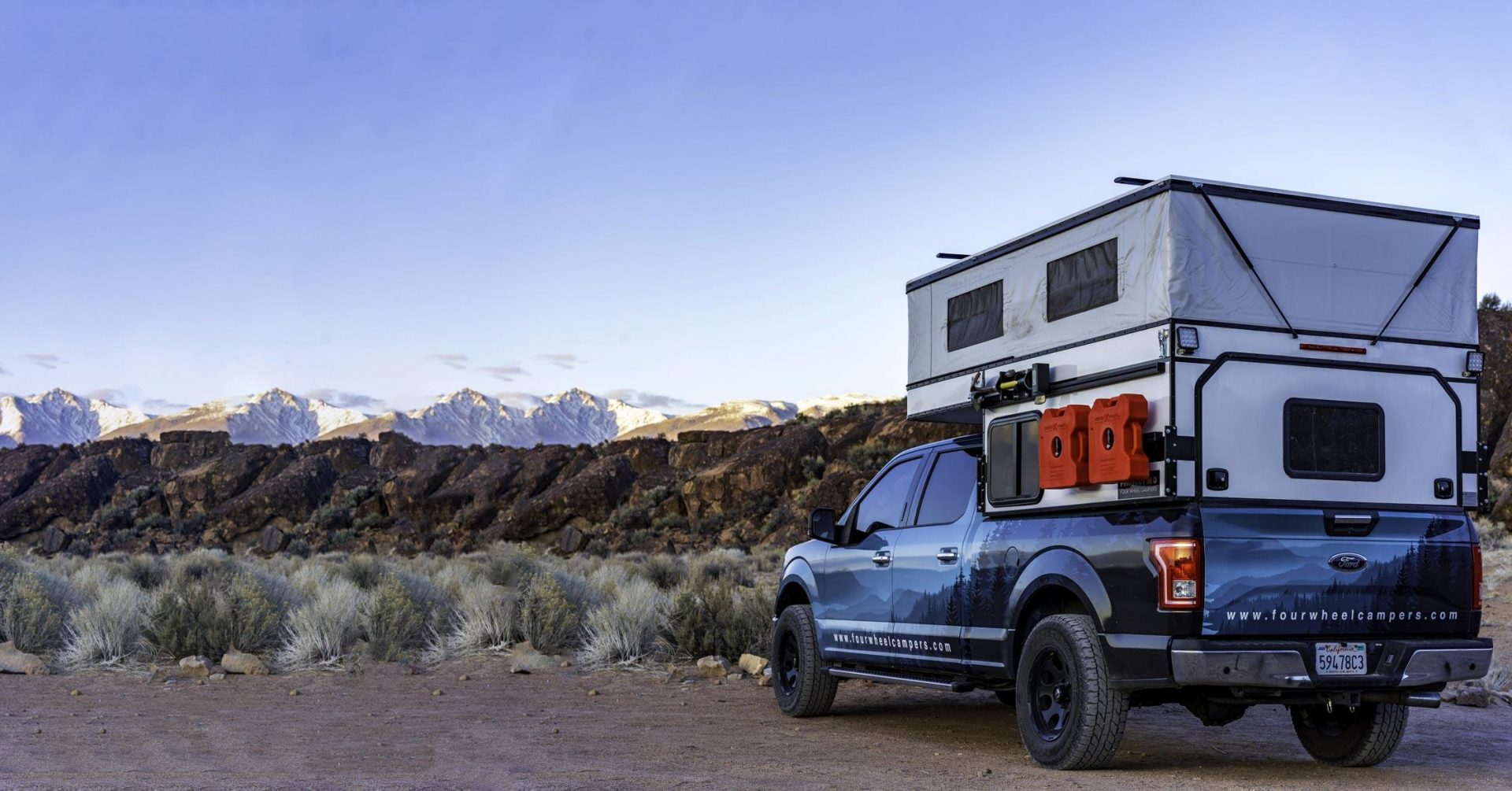 Lightest and cheapest4 Wheel Campers Project MFrom $12,900A pop-up topper that bolts to the bed rails. 352 to 465 lb, and you build the inside.View 4 Wheel Campers →
What a 4 Wheel Camper actually is
Four Wheel Campers has built pop-up truck campers in Woodland, California since 1972. Every model uses the same recipe: a welded all-aluminum "Flex-Frame", aluminum siding, a one-piece insulated aluminum roof and a fabric pop-up wall that folds down for driving. Closed, a slide-in stands 54 to 60 in tall including the roof vent, so it sits barely above the cab and the truck still drives like a truck. Popped up, you get 6 ft 4 in to 6 ft 6 in of headroom.
The reason 4WC is the name everyone starts with is reliability. It has been the most trusted brand in overland truck campers for decades, and a 4WC that is looked after easily lasts decades of steady use. Charley, who runs this site, still camps in a 2006 Eagle. The pop-up wall is a big part of that. It is not tent fabric but a thick, almost rubbery material: fully waterproof in his experience, heavy enough that you feel like you are in a camper rather than a tent, and it holds up over thousands of nights.
The trade-off is the one every pop-up makes: much less weight and height than a hard-sided camper, but a soft wall still lets in more cold and noise than a solid one, and you will want to vent at night to manage condensation. If you want to stand up inside, cook out of the wind and still fit under a low branch on a forest road, that trade is the whole point.
Three ways to buy one
- Project M topper (from $12,900): a pop-up shell that bolts to your bed rails, so the bed stays usable for gear. No plumbing or furnace standard; it is pre-wired for power and solar, with an optional 135Ah lithium battery.
- Slide-in campers (from $20,275): Swift, Fleet, Raven, Hawk and Grandby, each sized to a bed length. Each comes as a BASE shell, a CampOut build or a full camper (more on that below).
- Flatbed campers (from $43,150): Fleet, Hawk and Grandby built for a truck with the bed removed and a flatbed fitted, plus the newer Hawk+ for heavy-duty trucks at $47,850. More floor space, more storage, and a much bigger price.
The slide-in lineup at a glance
| Swift | Fleet | Raven | Hawk | Grandby | |
|---|---|---|---|---|---|
| Truck | Mid-size | Mid-size | Full-size | Full-size | Full-size |
| Bed length | 5 ft to 5 ft 8 in | 6 ft to 6 ft 7 in | 5 ft 5 in to 5 ft 8 in | 6 ft to 6 ft 7 in | 8 ft |
| Full camper price | $30,150 | $30,675 | $30,150 | $30,675 | $32,250 |
| BASE shell price | $20,275 | $20,800 | $20,275 | $20,800 | $21,850 |
| BASE dry weight (approx.) | 950 lb | 1,050 lb | 1,050 lb | 1,200 lb | 1,300 lb |
| Height closed / open | 54 / 87 in | 54 / 87 in | 60 / 89 in | 60 / 89 in | 60 / 89 in |
| Headroom popped up | 6 ft 4 in | 6 ft 4 in | 6 ft 6 in | 6 ft 6 in | 6 ft 6 in |
| Cabover bed | 72 × 76 in | 72 × 76 in | Queen 64 × 77 in (king option) | Queen 64 × 77 in (king option) | Queen 64 × 77 in (king option) |
| Sleeps (adults) | 2 to 3 | 2 to 3 | 2 to 3 | 2 to 3 | 2 to 4 |
| Fresh water | 20 gal | ||||
| Propane | Two 2.5 gal tanks | ||||
One caveat on weight: 4WC publishes an approximate dry weight for the BASE shell only. A full camper with the fridge, sink, water system and a furnace weighs more, and 20 gal of water adds about 167 lb on its own. Get the weight of your exact build from a dealer and check it against the payload sticker in your door jamb before you order. Our Tacoma guide walks through that math.
BASE, CampOut or full camper: what the extra money buys
The same Fleet or Hawk shell comes three ways, and the gap between them is about $10,000.
- BASE ($20,275 to $21,850): the shell with an open floor. 4WC is blunt about it: "No fridge, sink, or shower option." You can add a roll-over couch ($2,475) or a side or front dinette ($2,775 to $2,965). This is for people building their own interior, or who want a dry, insulated room and nothing else.
- CampOut series ($24,450 for 5 ft beds, $24,950 for 6 to 6.5 ft, $26,000 for 8 ft): a newer modular build. Standard are modular cabinets, a queen cabover bed with mattress, a lithium battery with a utility and power module, 120V shore power with a 30 amp converter, USB outlets, a roof fan, L-Track with Molle panels, and pre-wiring for solar and a Starlink Mini. 4WC doesn't publish a CampOut dry weight.
- Full camper ($30,150 to $32,250): the camper most people picture. 4WC's September 2026 spec sheets list a fridge (a 65L two-way on the Hawk), sink, stove, 20 gal water system and lithium battery as standard, with the roll-over couch floorplan. A side dinette is +$1,295 and a front dinette +$2,600.
Heat is the option almost everyone adds. 4WC now offers Truma furnaces and water heaters, and a quilted thermal pack for the soft walls is a paid option too. Price both into your build before you compare a 4WC with a hard-sided camper that includes heat. 4WC's Build and Price tool on its site, or a dealer quote, is the only reliable way to get your number: option pricing isn't listed on the model pages.
Which 4 Wheel Camper fits your truck
- Tacoma, Colorado, Canyon, Ranger, Frontier with a 5 ft bed: Swift, or Project M.
- The same trucks with a 6 ft bed: Fleet, or Project M. See our best truck campers for a Tacoma.
- Half-ton with a 5.5 ft bed (most crew-cab F-150s, Tundras, Silverados): Raven. See our F-150 guide.
- Half-ton or 3/4-ton with a 6 to 6.5 ft bed: Hawk.
- Full-size with an 8 ft bed: Grandby, the biggest slide-in, and the only one that sleeps up to 4.
- Jeep Gladiator: Project M lists the Gladiator; check the slide-ins with a dealer.
Our brand data also flags two fitment quirks owners should ask about: tie-down limits on some GMC composite beds, and a warranty caution on the Colorado and Canyon. Ask your dealer before you order for either truck.
Watch them on video
A walkthrough of the Hawk, the full-size slide-in for 6 to 6.5 ft beds, from Taco Vinyl TV:
Prospect Overland on living with a Project M for two years, which is the honest test of a minimalist topper:
Buying one: lead time, dealers and used
- Lead time: 4WC's site says "typically 2 to 3 months depending on location." Owners have reported much longer waits in busy years, so ask your dealer for a date in writing.
- Dealers: 4WC sells through a dealer network and points buyers to their local dealer for current lead times. Seeing a Fleet and a Hawk side by side is worth a drive, because the 6 ft 4 in vs 6 ft 6 in headroom and the bed width feel different in person.
- Warranty: 4WC lists 5 years on the roof, frame and siding.
- Used: 4WCs hold their value, and older models like the Eagle and Hawk turn up on the used market. A used camper is how many people get into a 4WC for less. We're writing a used-buying guide as part of Charley's Dream Rig series.
4 Wheel Campers vs the alternatives
- vs Phoenix Pop Up Campers: the closest match to a 4WC slide-in. Phoenix has built soft-wall pop-up slide-ins in Colorado since 1988, for mid-size, full-size and flatbed trucks. Every one is custom to order and sold factory direct, with no dealers. Prices in our directory run from $18,496 to $59,900. See Phoenix Pop Up Campers.
- vs Scout's Pop-Ups: Scout now builds pop-up versions of the Yoho ($31,490, 941 lb), Olympic ($33,490, 1,154 lb) and Kenai ($36,490, 1,336 lb) on its wood-free composite shell, priced right next to a full Fleet or Hawk. Heat and a fridge are options on every Scout. Our Scout Campers review has the full lineup.
- Project M vs OVRLND: the two are very similar. Both are shells that sit on the bed rails, built on the kind of welded aluminum frame 4WC has used for decades, with walls that pop up for standing room. OVRLND starts at $7,700, and its Bivy is under 230 lb. See our OVRLND Campers review.
- vs Go Fast Campers: a GFC is a bed on your truck; a 4WC is a small home in it. Our 4 Wheel Campers vs Go Fast Campers post covers who each one suits, including Project M vs the V2 Max.
- More options: every slide-in pop-top, every hard-sided slide-in, Topo Toppers, and the lightest truck campers under 1,000 lb.
Where 4WC owners hang out
One of the best parts of owning a 4WC is the community. There are a ton of groups and forums dedicated to these campers, and the build threads, fit questions and used listings there are worth more than any brochure.
- Four Wheel Campers Owners on Facebook: the owners group 4WC points to in its owner's manual.
- Wander the West: a long-running pop-up camper forum with years of 4WC build threads, a buyer's guide thread and used campers for sale.
- Expedition Portal: a thread that collects 4WC owners' trip blogs, and a good place to search any model by name.
- 4WC's customer rally: 4WC hosts an owners' campout, a chance to walk through dozens of real builds in one weekend.
What owners say
Recurring themes from owner forums and published reviews.
4 Wheel Campers: Pros
- Built to last: a well-kept 4WC lasts decades of steady use, and the thick, waterproof pop-up wall holds up over thousands of nights.
- Light for what you get: slide-in shells from about 950 to 1,300 lb, so many trucks keep usable payload.
- Low closed height (54 to 60 in) keeps the rig aerodynamic and under most branches and garage doors.
- The aluminum frame and one-piece roof hold up to washboard roads and off-road use.
- More than 50 years in business, a large dealer and service network, and strong resale value.
- Recent upgrades include Truma furnaces and water heaters, lithium power, and Victron and Redarc electrics.
- Reaches remote, simple campsites a hard-side RV cannot.
4 Wheel Campers: Cons
- Expensive for the size: a full camper starts above $30,000 before heat, and loaded builds climb past $40,000.
- Soft walls let in more cold and condensation; owners vent while sleeping, and the thermal pack costs extra.
- Lead times can stretch well past the quoted 2 to 3 months in busy seasons.
- Some owners report inconsistent quality control and customer service.
- The interior is basic and utilitarian, with laminate cabinets rather than a finished, roomy feel.
- Fitment quirks on some trucks, such as GMC composite beds and the Colorado and Canyon.
Who should skip 4 Wheel Campers
- You camp in deep cold most of the time. A pop-up works in winter with a furnace and thermal pack, but a hard-sided camper is easier to live in.
- You want a bathroom and shower inside. 4WC slide-ins are built around light weight, not a wet bath.
- You only need a bed on weekends. Project M or a Go Fast Campers platform costs less than half as much and weighs about a third as much.
The verdict
4 Wheel Campers has been the most reliable name in overland truck campers for decades, and it shows: light, low, built to last decades of use, and backed by 50 years of dealers, owners and resale value. On a mid-size truck with a 6 ft bed, start with the Fleet; on a half-ton with a 6 to 6.5 ft bed, the Hawk. Budget about $31,000 for the full camper, plus heat, and confirm the weight of your exact build against your payload before you sign.
If you mostly need somewhere to sleep, Project M at $12,900 gets you the same shell idea for less than half the price. If you want to build your own interior, the BASE shell or the CampOut series are the in-between steps.
Still deciding? See the full specs for 4 Wheel Campers, compare every slide-in pop-top, or browse every brand in the camper directory.
Prices, BASE dry weights, dimensions, bed fit, CampOut standard features, lead time and warranty verified against fourwheelcampers.com on November 12, 2026. Full-camper standard equipment is from 4WC's September 2026 spec sheets; 4WC's model pages list starting prices but not option prices. Notes on longevity and the pop-up wall are Charley's, from years with his 2006 Eagle. Other owner observations come from forums and published reviews and should not be read as brand-wide patterns. Videos: Taco Vinyl TV and Prospect Overland (independent). Images: Four Wheel Campers.
Ready to find your camper?
Compare All Brands